The Official Cannabis Independent strain guides
The Official Cannabis collection · sheet 30No 30 · Tropicana CookiesUniverse

The Tropicana Cookies universe

The Orangery Keeper

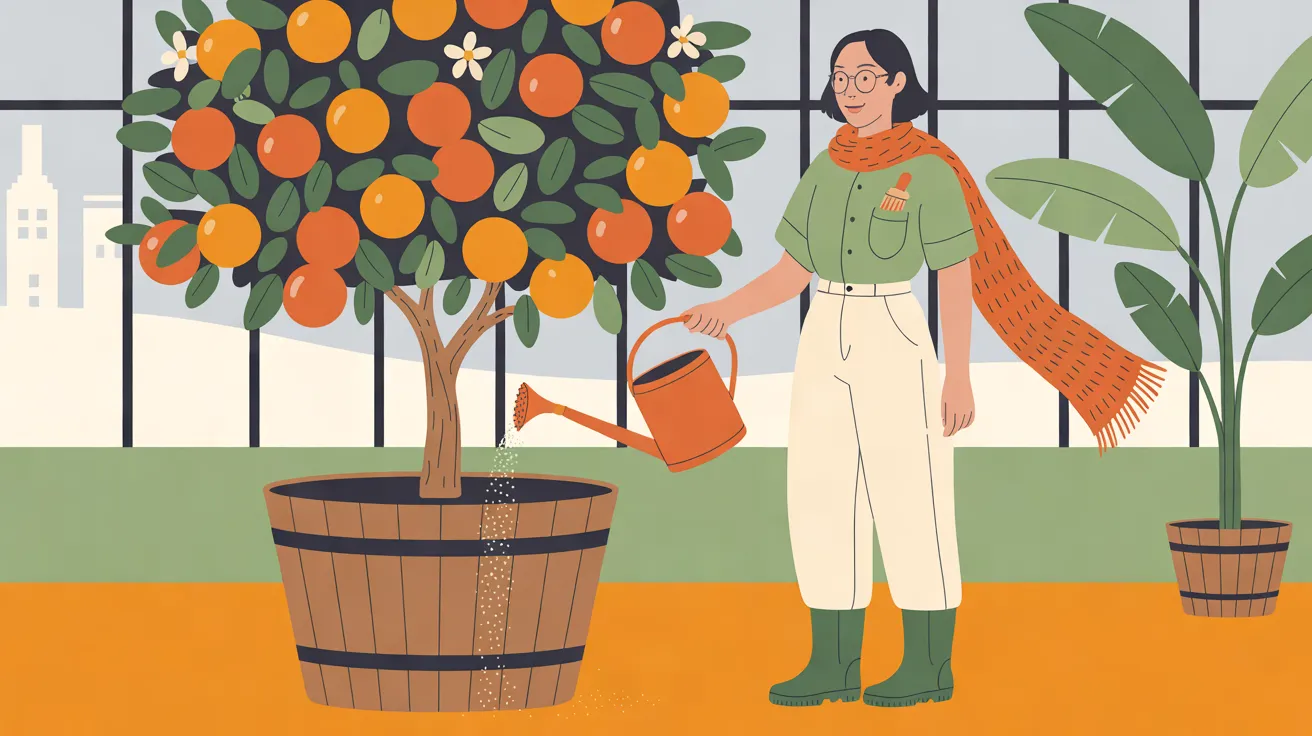
If Tropicana Cookies is your strain, this is your sign: the Orangery Keeper. A glasshouse on the hill above a cold city, a grey winter afternoon, pale towers beyond the panes, and you beside the old orange tree with a copper watering can, keeping summer going.

The Orangery Keeper, a young woman with a short black bob and round wire-rimmed spectacles, in a short-sleeved sage-green shirt with a paintbrush in the pocket, high-waisted cream trousers, dark green rubber boots and a long tangerine knitted scarf, stands right of center in a glasshouse and tilts an orange watering can; a stream of water drops falls from its spout down the front of a big wooden tub. The tub holds an orange tree with ripe oranges and a few white blossoms that fills the left half of the picture, and a banana plant in a smaller tub stands at the far right. Behind them, dark-framed glass panes above a sage-green wall show pale cream city buildings and a cream slope under a pale grey sky, and the floor is orange.
Winter beyond the glass and summer under it: the old tree in fruit and blossom, and the copper can tipped over the tub.

If Tropicana Cookies is your strain

You are the one who keeps summer going. When the city goes white and quiet and everyone else turns up their collars, you climb the hill to the glasshouse, stamp the snow off your boots and step into the warm, and your spectacles fog over, and you laugh, every single time. Cold does not slow you down. It gives you something to do.

You move quickly and you finish what you start. You can feed the stove, water forty pots, wipe a window clear and carry pollen from one white blossom to the next in the time it takes someone else to find their gloves. You talk to the tree while you work and are not embarrassed about it. You are bright company, a little sharp at first and sweet underneath, like a peel you smell before you see the fruit.

At your best you make a warm place in the middle of a cold one and leave the door open just long enough for other people to find it. They come up the hill to stand by your stove for ten minutes and go back down feeling as if they have been somewhere far to the south. You never mention that the warmth took all night.

Your flaw is that every cold thing looks like a job to you. A draft, a quiet friend, a long face across a table: you go at all of them with a watering can and a cheerful plan. Some cold things only want to be left alone until spring, and you are learning, slowly, to let them.

What you need is a stove that draws, glass you can see through, one tree that is older than you are, and the last ten minutes of winter light, when the snow outside turns orange and the fruit inside turns gold and for a moment you cannot tell which is which.

Your sign at a glance

Your hour
The last light of a winter afternoon
Your place
Under the old orange tree, by the stove
Your object
A long-spouted copper watering can
Your tempo
Brisk: two steps to everyone else’s one
Your weather
Snow outside, summer under glass
Your flaw
Every cold thing looks like a job

Your people

  • The Mountain Elder (Hindu Kush)The Mountain Elder comes down off the pass once a winter and stands by your stove with snow still on his shoulders. You let him. You would not let anyone else.
  • The Aurora Keeper (Northern Lights)The Aurora Keeper keeps her light out in the cold and you keep yours under glass. She comes in to warm her hands; you go out to see her sky.
  • The Sprinter (Green Crack)The Sprinter grew up running through a mango grove. She is the only visitor who understands, without being told, why the door has to shut so fast.

Things you say

  • Shut the door, you’re letting the winter in.
  • If you can see your breath, I’m not done yet.
  • One orange out the door, every winter.
  • The snow can have the city. It can’t have the tree.
  • Everything is easier at twenty-six degrees.

A scene from your world

The first orange of winter

By half past three the city below the hill has gone the color of milk. Snow comes down on the steep roofs, on the tram wires, on the long glass roof of the orangery, where it settles in soft drifts between the iron ribs. The thermometer by the gate reads fourteen below. The brass one on the pillar inside reads twenty-six above, and the Orangery Keeper intends to keep it there.

She does her rounds at a pace that sets the ferns swaying. Stove first: she opens the iron door, feeds it two split logs, shuts it and listens to it draw. Then the watering can, long-spouted and copper, filled from the warm tank and carried down the beds, a little for the banana, a little for the ferns, a long slow drink for the tub in the middle. Then the windows. She wipes one round, clear circle in the fogged glass beside the path, as she does every afternoon, so the people trudging home below can look up and see what is in here.

What is in here is the tree. It stands in a wooden tub the size of a cart, older than the Keeper and older than the stove, glossy and dark and stubborn, and in the middle of winter it is doing two things at once: holding up its oranges and opening a few small white blossoms, as if nobody has told it about the snow. It is the second tree of its line. The first came up the mountain from the coast in a crate, long before anyone now living, and when it died a keeper planted one of its pips in the same tub. This is what came up.

The Keeper takes the soft brush from her shirt pocket and goes from blossom to blossom, a little pollen on the bristles, a little on the next flower, humming. Then she stops. High on the south side, where the light stays longest, one orange has turned all the way round: no yellow at the shoulder, no green at the stem, warm when she cups it in her hand.

She looks at it for a long moment. Then she twists it free, gently, and goes to the door.

Opening the door in winter is the one part of the job she hates. The cold comes in like a dropped tray, the panes cloud over and her spectacles fog solid. She steps out anyway, in shirtsleeves, into the snow, and holds the orange up in front of the round window she wiped, so the man who sweeps the park path can see it. He has swept that path every winter she has kept the glasshouse. He climbs the steps, takes the orange in both gloved hands and holds it close for a while, the way people hold a letter from somewhere warm.

Then she is back inside with the door shut, wiping her glasses on her scarf, laughing at nothing, already reaching for the watering can. Outside, the sun drops behind the ridge, and for one minute the snow on the roof turns exactly the color of the fruit.
The orangery

The old tree
An orange tree in a wooden tub the size of a cart, second of its line. All winter it carries fruit and blossom at the same time, which the Keeper takes as a sign of good character.
The stove
Black iron, on the brick floor in the middle of the beds, fed every hour from dark to dark. When it draws well it makes a sound like a kettle two rooms away.
The round window
One clear circle wiped in the fogged glass beside the path every afternoon, so that anyone walking home below can look up and see an orange tree in the snow.
The two thermometers
One by the gate, one on the iron pillar inside, never within thirty degrees of each other in winter. People climb the hill just to read both.
The first orange
The first fruit to turn all the way round goes out the door, to whoever has kept the park path clear that winter. Nobody remembers who started it, and nobody would stop it.
The roof after snow
When a drift lets go of the glass it slides the whole length of the roof with one long hush, and for a second the light inside doubles.

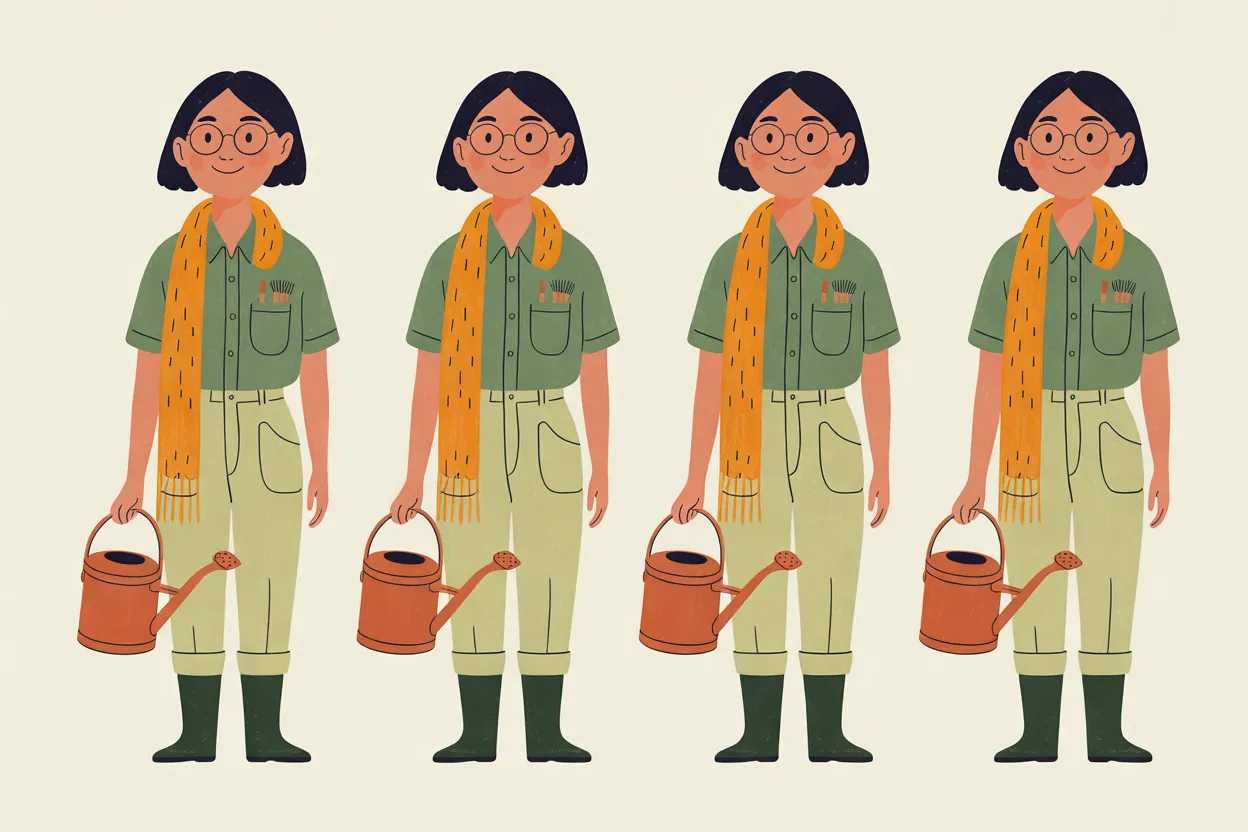
The Orangery Keeper, from every side

The Orangery Keeper character sheet on a warm cream background: four identical full-body front views side by side, each smiling with closed lips and holding a copper watering can by its handle in one hand, the other arm at her side. In every view she has a short black bob, round spectacles, a sage-green short-sleeved shirt with brushes in the pocket, a long tangerine knitted scarf, pale khaki trousers and dark green rubber boots.
The Orangery Keeper four times over, front on: round spectacles, tangerine scarf, the copper watering can in hand and the soft brushes in her pocket, and the same small smile each time, the one she keeps for the first orange of winter.

An original character, created for Tropicana Cookies by Official Cannabis. Art direction by Official Cannabis.

Wear the summer under glass

Pieces from this world come on a tee, a hoodie, stickers, a mug and a print.